Monday, December 24, 2012
Monday, October 22, 2012
A Farewell to Kindle DX
I have meant to sell my Kindle DX for a while but was prevented from doing so by various forces in life. I was slightly affected by the news that Amazon quietly removed the Kindle DX from its inventory but we saw it coming all along did not we?
Let's face it, the Kindle DX was a flop. It was meant to take over the textbook and newspaper market, however the technology was simply not there. It was priced way too high ($489) when it was released and have always had an aggregation of minor issues. By the time most of these annoyances were fixed with the graphite edition, it was too late to capture the hearts of readers and publishers as well, especially the latter who saw the iPad as a better platform to deliver their increasing multimedia content. Amazon itself did not help by giving the DX as little support as they could, and it never saw a truly global release.
I have always held a low opinion of the iPad , at least the first two iterations, however the new iPad really won a change of heart in me. The screen has a whooping 261dpi and full RGB colour gamut, which is better than 90% of the laptops you can buy. It is great for reading everything from books, journal articles, textbooks and of course manga. Once you have seen it with your own eyes you will be convinced - or else get your eyesight checked by a professional.
The main problem is with the less than ideal automatic brightness detection - you need to manually tweak it as lighting changes to minimise eye fatigue. The other project relates to the lack of proper font management in many apps - Greek letters and other symbols tend to disappear from random places, while it is not too bad for biology I assume this is going to be an issue for mathematicians and physicists.
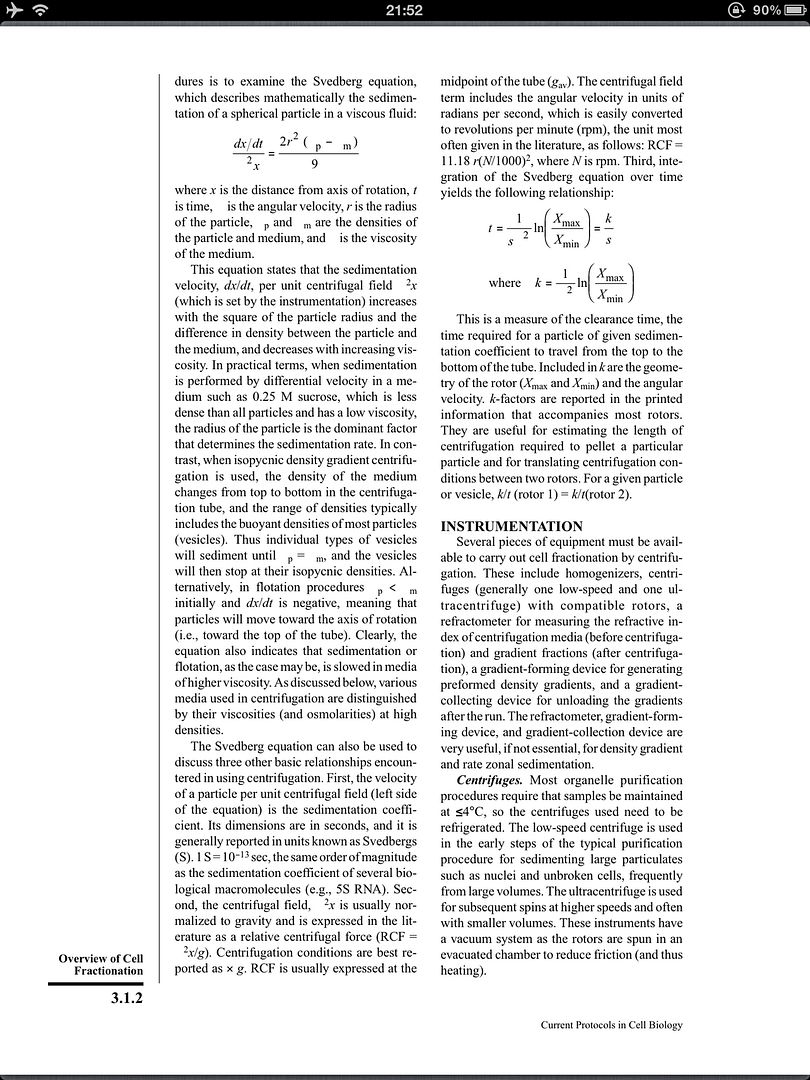
Anyway thanks to Amazon for trying, thanks to Apple for making something that's just better and thanks to Yifan Lu for developing the firmware hacks that made me keep it for much longer. Maybe one day we will see a comeback but for now, adieus.
Let's face it, the Kindle DX was a flop. It was meant to take over the textbook and newspaper market, however the technology was simply not there. It was priced way too high ($489) when it was released and have always had an aggregation of minor issues. By the time most of these annoyances were fixed with the graphite edition, it was too late to capture the hearts of readers and publishers as well, especially the latter who saw the iPad as a better platform to deliver their increasing multimedia content. Amazon itself did not help by giving the DX as little support as they could, and it never saw a truly global release.
I have always held a low opinion of the iPad , at least the first two iterations, however the new iPad really won a change of heart in me. The screen has a whooping 261dpi and full RGB colour gamut, which is better than 90% of the laptops you can buy. It is great for reading everything from books, journal articles, textbooks and of course manga. Once you have seen it with your own eyes you will be convinced - or else get your eyesight checked by a professional.
The main problem is with the less than ideal automatic brightness detection - you need to manually tweak it as lighting changes to minimise eye fatigue. The other project relates to the lack of proper font management in many apps - Greek letters and other symbols tend to disappear from random places, while it is not too bad for biology I assume this is going to be an issue for mathematicians and physicists.
Note the incomplete differential equation, all the greek letters are gone
Anyway thanks to Amazon for trying, thanks to Apple for making something that's just better and thanks to Yifan Lu for developing the firmware hacks that made me keep it for much longer. Maybe one day we will see a comeback but for now, adieus.
Also, the new iPad still has too much glare to be viewed under direct sunlight - with
the high dpi screen matte screen protector is not the solution, might as
well cover one's head in sand.

Saturday, October 6, 2012
Sunday, September 16, 2012
Gustave Le Bon is my hero
Recent developments in geopolitics has directed me to read Gustave Le Bon's opus magnum The Crowd again. I have always meant to read it since I am generally in agreement with the author and thought there was no need to reinforce your own opinion; now I fully and truly regret not reading more earlier. Especially for the following passage:
"The whole of the common characteristics with which heredity endows the individuals of a race constitute the genius of the race. When, however, a certain number of these individuals are gathered together in a crowd for purposes of action, observation proves that, from the mere fact of their being assembled, there result certain new psychological characteristics, which are added to the racial characteristics and differ from them at times to a very considerable degree...
...the great upheavals which precede changes of civilisations such as the fall of the Roman Empire and the foundation of the Arabian Empire, seem at first sight determined more especially by political transformations, foreign invasion, or the overthrow of dynasties. But a more attentive study of these events shows that behind their apparent causes the real cause is generally seen to be a profound modification in the ideas of the peoples. The true historical upheavals are not those which astonish us by their grandeur and violence. The only important changes whence the renewal of civilisations results, affect ideas, conceptions, and beliefs. The memorable events of history are the visible effects of the invisible changes of human thought. The reason these great events are so rare is that there is nothing so stable in a race as the inherited groundwork of its thoughts...
P.S. To clarify my views on the issues mentioned at the beginning:
1. Not withstanding the shaky principle of "ad coelum et ad inferos", one simply cannot own water. One might be able to claim ownership of a creek, pond or billabong, but how could anybody justify ownership (i.e. exclusive right of use and sale) a span of water itself that theoretically you cannot even make two crossings?

"The whole of the common characteristics with which heredity endows the individuals of a race constitute the genius of the race. When, however, a certain number of these individuals are gathered together in a crowd for purposes of action, observation proves that, from the mere fact of their being assembled, there result certain new psychological characteristics, which are added to the racial characteristics and differ from them at times to a very considerable degree...
...the great upheavals which precede changes of civilisations such as the fall of the Roman Empire and the foundation of the Arabian Empire, seem at first sight determined more especially by political transformations, foreign invasion, or the overthrow of dynasties. But a more attentive study of these events shows that behind their apparent causes the real cause is generally seen to be a profound modification in the ideas of the peoples. The true historical upheavals are not those which astonish us by their grandeur and violence. The only important changes whence the renewal of civilisations results, affect ideas, conceptions, and beliefs. The memorable events of history are the visible effects of the invisible changes of human thought. The reason these great events are so rare is that there is nothing so stable in a race as the inherited groundwork of its thoughts...
...a crowd is always ready to revolt against a feeble, and to bow
down servilely before a strong authority. Should the strength of
an authority be intermittent, the crowd, always obedient to its
extreme sentiments, passes alternately from anarchy to servitude,
and from servitude to anarchy.
However, to believe in the predominance among crowds of
revolutionary instincts would be to entirely misconstrue their
psychology. It is merely their tendency to violence that
deceives us on this point. Their rebellious and destructive
outbursts are always very transitory. Crowds are too much
governed by unconscious considerations, and too much subject in
consequence to secular hereditary influences not to be extremely
conservative. Abandoned to themselves, they soon weary of
disorder, and instinctively turn to servitude. It was the
proudest and most untractable of the Jacobins who acclaimed
Bonaparte with greatest energy when he suppressed all liberty and
made his hand of iron severely felt.
It is difficult to understand history, and popular revolutions in
particular, if one does not take sufficiently into account the
profoundly conservative instincts of crowds. They may be
desirous, it is true, of changing the names of their
institutions, and to obtain these changes they accomplish at
times even violent revolutions, but the essence of these
institutions is too much the expression of the hereditary needs
of the race for them not invariably to abide by it. Their
incessant mobility only exerts its influence on quite superficial
matters. In fact they possess conservative instincts as
indestructible as those of all primitive beings. Their fetish-
like respect for all traditions is absolute; their unconscious
horror of all novelty capable of changing the essential
conditions of their existence is very deeply rooted. Had
democracies possessed the power they wield to-day at the time of
the invention of mechanical looms or of the introduction of
steam-power and of railways, the realisation of these inventions
would have been impossible, or would have been achieved at the
cost of revolutions and repeated massacres. It is fortunate for
the progress of civilisation that the power of crowds only began
to exist when the great discoveries of science and industry had
already been effected."
I don't really care if Shakespeare was to be removed from curriculum,but Le Bon should be taught in every school if we are to avoid breeding another generation of goons.
P.S. To clarify my views on the issues mentioned at the beginning:
1. Not withstanding the shaky principle of "ad coelum et ad inferos", one simply cannot own water. One might be able to claim ownership of a creek, pond or billabong, but how could anybody justify ownership (i.e. exclusive right of use and sale) a span of water itself that theoretically you cannot even make two crossings?
2. The film was made and uploaded to YouTube back in April this year and it sort of just stayed there without much incident (I tried to watch but had to give up two minutes into it because it was so bad, if it did really cost millions I'd report money laundering). Fast forward to a week before Sep.11, everybody was talking about it. If this does not seem fishy, the Danish cartoons that caused quote a bit of stir were published on Sep.30, 2005, there were some exchanges of criticism however the riots did not take off until February 2006 after two Danish imams personally disseminated information (a mixed bag of truth and blatant lies) abroad. Coincidence much? I doubt that.
3.People will have to embrace nuclear power once fossil fuel runs out (which will eventually). Those short-sighted who disinvest themselves now will suffer by then. At least the additional import of coal and gas to generate power will fix their current account balance for the moment.
4. Translated:
(You idiot, that balaclava is totally uesless for daylight robbery.)
(What should I wear then)
The rest is self-explanatory
Sunday, April 22, 2012
How to: Unlock your iPhone with SAM
THIS METHOD NO LONGER WORKS AS OF Apr.28, 2012; activation records will remain valid for three years from the day of activation.
I thought the IMSI unlock saga is done and dusted but apparently there are more to it. All credit goes to Loktar_Sun from weiphone.com who pursued an earlier lead that many, yours truly included, have gave up as a viable exploit.
What do you need: A jailbroken iPhone that can be activated in iTunes (that is, not officially blacklisted), a computer with the latest iTunes installed and working internet connection. You will also need to know the carrier that your iPhone is locked to.
1. Step one: Install Sam Bingner's SAM (Subscriber Artificial Module) package. I recommend that you get it from repo.bingner.com since older versions have a different interface and may not work for this purpose.
2. Enter SAM by either going through the settings menu or find the SAMPrefs icon on your springboard. You will need to have the SIM card you intend to use in your phone.
3. Go to utilities and select "De-Activate iPhone", your ActivationState under "More Information" should now be "Unactivated"
4. With SAM enabled, choose "By Country and Carrier" in "Method"; find your carrier, for some carriers operating more than one Carrier ID you may need to select "SIM ID"; easy to tell since iTunes will not activate if the wrong IMSI is selected.
5. Go to More Information", copy or write down the IMSI in "SAM Details", then tap "Spoof Real SIM to SAM".
6. Go back to the main SAM screen and change your "Method" to manual. Paste or enter the IMSI string we saved in Step 5.
7. Connect your iPhone to your computer and allow iTunes to do its job (namely re-activating your phone), double click "Phone Number" parameter at the main device screen and make sure that the ICCID matches that of your SIM card. If not you need to start over from Step 1.


8. Unplug your phone, close iTunes.
 9. Disable SAM. The source article says to uninstall SAM and delete your lockdownd folders; it's unnecessary.
10. Connect your phone to iTunes again, you should get an error saying that your phone cannot be activated. This is normal. Just close iTunes and open it again.
11. You should see signal bars in a short time, congratulations.
12. Push notifications may stop working after this procedure but can be easily restored with "clear push" utility in SAM followed by connecting to iTunes.
Your phone will work normally with your SIM card and that SIM card ONLY since we have tricked iTunes to think that ICCID is one of the intended carrier's. The phone can be rebooted and connected to iTunes freely without losing the "unlock", at least for now.
Since it does not involve emergency numbers or IMSI spoofing it will not have any of the issues associated with SIM interposers. Tested working on iOS 5.01 but should work with tethered 5.1 too.
-------------------------------------------------------------------------------------------------------
I thought the IMSI unlock saga is done and dusted but apparently there are more to it. All credit goes to Loktar_Sun from weiphone.com who pursued an earlier lead that many, yours truly included, have gave up as a viable exploit.
What do you need: A jailbroken iPhone that can be activated in iTunes (that is, not officially blacklisted), a computer with the latest iTunes installed and working internet connection. You will also need to know the carrier that your iPhone is locked to.
1. Step one: Install Sam Bingner's SAM (Subscriber Artificial Module) package. I recommend that you get it from repo.bingner.com since older versions have a different interface and may not work for this purpose.
2. Enter SAM by either going through the settings menu or find the SAMPrefs icon on your springboard. You will need to have the SIM card you intend to use in your phone.
3. Go to utilities and select "De-Activate iPhone", your ActivationState under "More Information" should now be "Unactivated"
4. With SAM enabled, choose "By Country and Carrier" in "Method"; find your carrier, for some carriers operating more than one Carrier ID you may need to select "SIM ID"; easy to tell since iTunes will not activate if the wrong IMSI is selected.
5. Go to More Information", copy or write down the IMSI in "SAM Details", then tap "Spoof Real SIM to SAM".
6. Go back to the main SAM screen and change your "Method" to manual. Paste or enter the IMSI string we saved in Step 5.
7. Connect your iPhone to your computer and allow iTunes to do its job (namely re-activating your phone), double click "Phone Number" parameter at the main device screen and make sure that the ICCID matches that of your SIM card. If not you need to start over from Step 1.


8. Unplug your phone, close iTunes.
 9. Disable SAM. The source article says to uninstall SAM and delete your lockdownd folders; it's unnecessary.
10. Connect your phone to iTunes again, you should get an error saying that your phone cannot be activated. This is normal. Just close iTunes and open it again.
11. You should see signal bars in a short time, congratulations.
12. Push notifications may stop working after this procedure but can be easily restored with "clear push" utility in SAM followed by connecting to iTunes.
Your phone will work normally with your SIM card and that SIM card ONLY since we have tricked iTunes to think that ICCID is one of the intended carrier's. The phone can be rebooted and connected to iTunes freely without losing the "unlock", at least for now.
Since it does not involve emergency numbers or IMSI spoofing it will not have any of the issues associated with SIM interposers. Tested working on iOS 5.01 but should work with tethered 5.1 too.
Thursday, April 19, 2012
Tuesday, April 10, 2012
Easter Summary
Friday: Went to Long Bay for a casual barbeque/walk on the beach. Did not have enough meat to go around so ended up eating grilled ham slices and grilled bananas. After that a friend was nice enough to offer a tour of his new house and a ride in his ice cream van (Literally, he no longer need to earn his living but still scoops ice cream 3 days a week purely for the laughs. I'd love to do this after my retirement in, er, 40 years)
Saturday: Fatigued from yesterday so stayed inside to watch South Park and Nisemonogatari. A headache inevitably developed and got worse after dinner. Slept from 8pm to midnight under the influence of ibuprofen.
Sunday: Unable to go back to sleep so decided to do an allnighter. Attempted to start composing my literature review but ended up looking at random photo collections on cracked.com. Washed my lab coat and canvas bags before discovering that I had ran out of bleach; went all the way to the supermarket without realising it wassabbathEaster Sunday. And no, there was no high nor crash following that thanks to my messed up sleeping cycle.
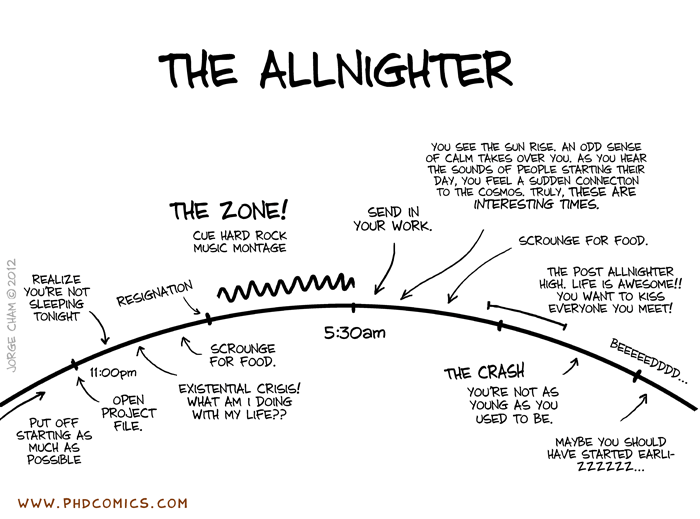
Monday: Drove to the old house to mow the lawn, boring except the part when I had to mentally calculate a 2 stroke mixture
Sorry but no photos, I was way too relaxed and perhaps lazy for it.
Anyway thanks for reading, at least there will be a (good-ish) song in the end as a reward.
P.S. I have always meant to catch up on viewing Guren Lagann but did it reallt come out in 2007? Unbelievable.
Saturday: Fatigued from yesterday so stayed inside to watch South Park and Nisemonogatari. A headache inevitably developed and got worse after dinner. Slept from 8pm to midnight under the influence of ibuprofen.
Sunday: Unable to go back to sleep so decided to do an allnighter. Attempted to start composing my literature review but ended up looking at random photo collections on cracked.com. Washed my lab coat and canvas bags before discovering that I had ran out of bleach; went all the way to the supermarket without realising it was
Piled Higher and Deeper, the xkcd especially for graduate students
Monday: Drove to the old house to mow the lawn, boring except the part when I had to mentally calculate a 2 stroke mixture
Sorry but no photos, I was way too relaxed and perhaps lazy for it.
Anyway thanks for reading, at least there will be a (good-ish) song in the end as a reward.
P.S. I have always meant to catch up on viewing Guren Lagann but did it reallt come out in 2007? Unbelievable.
Monday, February 20, 2012
World peace is here
Updated on 10/04/12; replaced the video with the first version from the author (or singer). Essentially the same.
Did I mention there was not a single black character in Hokuto no Ken?
Did I mention there was not a single black character in Hokuto no Ken?
Monday, February 6, 2012
They're both convinced...
...that a sudden passion joined them.
Such certainty is beautiful,
but uncertainty is more beautiful still.
-
Since they'd never met before, they're sure
that there'd been nothing between them.
But what's the word from the streets, staircases, hallways --
perhaps they've passed each other a million times?
-
that there'd been nothing between them.
But what's the word from the streets, staircases, hallways --
perhaps they've passed each other a million times?
-
I want to ask them
if they don't remember --
a moment face to face
in some revolving door?
perhaps a "sorry" muttered in a crowd?
a curt "wrong number" caught in the receiver?
but I know the answer.
No, they don't remember
They'd be amazed to hear
that Chance has been toying with them
now for years.
-
if they don't remember --
a moment face to face
in some revolving door?
perhaps a "sorry" muttered in a crowd?
a curt "wrong number" caught in the receiver?
but I know the answer.
No, they don't remember
They'd be amazed to hear
that Chance has been toying with them
now for years.
-
Not quite ready yet
to become their Destiny,
it pushed them close, drove them apart,
it barred their path,
stifling a laugh,
and then leaped aside.
-
to become their Destiny,
it pushed them close, drove them apart,
it barred their path,
stifling a laugh,
and then leaped aside.
-
There were signs and signals,
even if they couldn't read them yet.
Perhaps three years ago
or just last Tuesday
a certain leaf fluttered
from one shoulder to another?
Something was dropped and then picked up.
Who knows, maybe the ball that vanished
into childhood's thicket?
-
even if they couldn't read them yet.
Perhaps three years ago
or just last Tuesday
a certain leaf fluttered
from one shoulder to another?
Something was dropped and then picked up.
Who knows, maybe the ball that vanished
into childhood's thicket?
-
There were doorknobs and doorbells
where one touch had covered another
beforehand.
Suitcases checked and standing side by side.
One night, perhaps, the same dream,
grown hazy by morning.
-
where one touch had covered another
beforehand.
Suitcases checked and standing side by side.
One night, perhaps, the same dream,
grown hazy by morning.
-
Every beginning
is only a sequel, after all,
and the book of events
is always open halfway through.
is only a sequel, after all,
and the book of events
is always open halfway through.

R.I.P.Mme Szymborska; thanks for turning me into a hopeless romatic
Saturday, December 31, 2011
Farewell 2012
Fitting song for the occasion, taken from a post that I started 2 years ago but never finished.
No, that's not the worst thing. I have recently decided to use Evernote again. After logging into my old account I found a couple of todo lists I wrote back in March this year. Sadly, NOTHING on that list has been completed yet.
Seriously, 2011 went in a blur. I have sorted of managed to finish a degree and contemplating another but my life is not going anywhere as we speak. I hope 2012 will bring some much needed changes.
Friday, December 30, 2011
Tuesday, October 25, 2011
Monday, October 3, 2011
Site-Directed Mutagenesis Redux
My current research project involves introducing single-base mutations as well as in frame deletions to a human gene and study their effects on the protein product. My supervisor was kind enough to purchase a rather expensive commercial kit for the purpose.
So we went ahead with the kit. The positive controls worked brilliantly, so did the competent cells that came with the kit. However every experiment we did failed; not even a single colony formed.
The next two months were spent in frustration and confusion. We tried many suggestions from various websites as well as colleagues, none of which worked. The situation seemed especially bleak at one point when the kit ran out and we had to wait for weeks for more material to arrive while doing nothing since we don't have the right constructs to work with.

Jumping ahead to the present day, we were able to achieve the goal by doing it the hard way. Looking back at our past attempts, a lot of the "helpful hints" we got from the internet were wrong; senior lab members at my university, while more experienced, did not necessarily understand the mechanism of mutagenesis either so their advice were of little help (one technician simply suggested blasting through with large doses of every ingredient, seems like he got lucky with his way on every occasion). In addition there were too many other issues with our methodology and record-keeping that lead us into many dead ends; our sterile techniques were also less than perfect that we wasted much time and resource fooled by several cases of false positive results due to contamination, etc etc.
So what went wrong? Let's begin with a short summary of various historical and contemporary approaches to site-directed mutagenesis.
The first site-directed mutagenesis methoddescribed by Hutchison et al was published in 1978. In essence the method involves the synthesis of a short oligonucleotide primer containing the mutated sequence, which is hybridised with the wild type ssDNA and extended with DNA polymerase before transformation into E coli.

The protocol did not eliminate the template and hence less than 20% of progeny will retain the mutation, requiring tedious selection, a major pain back in the 1970s with DNA sequencing in its infancy and Kary Mullis a few trips away from inventing PCR. It is not surprising that some better funded and less patient labs resorted to have the mutant gene completely synthesised at great expense or in a less extreme version known as cassette mutagenesis, partially synthesised with suitable cloning sites and inserted into the vector by ligation.

Fortunately for the less privileged, many improved protocols soon emerged to increase mutant yield and reduce the burden of selection. One of the most significant advancement was developed by Kunkel et al., in which...Oh well I'd be lazy for once and quote wikipedia directly:
"The plasmid to be mutated is transformed into an E. coli strain deficient in two enzymes, UTPase and uracil deglycosidase. The UTPase deficiency prevents the breakdown of UTP, a nucleotide that normally replaces dTTP in RNA, resulting in an abundance of UTP; the uracil deglycosidase deficiency prevents the removal of UTP from newly-synthesized DNA. As the double-mutant E. coli replicates the transformed plasmid, its enzymatic machinery incorporates UTP, resulting in a distinguishable copy. This copy is extracted, and then incubated with the Klenow fragment, dNTPs, DNA ligase, and an oligonucleotide containing the desired mutation, which attaches by base pairing to the complementary wild type gene sequence. The ensuing reaction replicates the UTP-containing plasmid using the oligonucleotide as primer, thus incorporating the desired mutation. This forms a chimeric plasmid, with one strand unmutated and containing UTP, and the other strand mutated and containing dTTP. When this plasmid is transformed into an E. coli strain with normal UTPase and uracil deglycosidase, the UTP-containing strand is broken down, whereas the mutation-containing strand is replicated, forming a plasmid lacking UTP but containing the desired mutation on both strands."
This method is seldom used nowadays because there are easier and better ways out there, nevertheless the idea of template elimination took hold and contributed the basis of all mutagenesis strategies used today.
Probably through pure coincidence, dam methylation of E coli was also characterised in the 70s. The neat system provides a simple way to distinguish daughter strands following replication through the lack of methylation on certain adenine bases. The daughter strand is then selectively removed by a methylation sensitive enzyme such as endonuclease MutH. A restriction enzyme called DpnI also acts on the same site and specifically digest the unmethylated strand. It did not take much imagination to realise that DpnI is the perfect tool to selectively remove the template without affecting unmethylated DNA generated in vitro.

Yet the easiest way to synthesise DNA, namely PCR, is riddled with random errors that it was limited to small fragments. Yields with the more commonly used T4 DNA polymerase were poor and selection was still carried out via phenotype or special vectors for the next decade. Finally the hurdle was removed with discovery of proof-reading thermostable DNA polymerases, which allowed the direct use of any dsDNA with thermal cycling, greatly reducing the complexity of DNA amplification.
Thanks to technology, most commercial "fast" mutagenesis kits use thermal cycling followed by DpnI digestion to remove the template before transforming them to cells on the same day, yet their internal mechanism may be more different than you think.
The simplest implementation popularised by Stratagene is known as Quickchange. Two overlapping primers containing the desired mutation are used with a proof-reading DNA polymerase to generate nicked plasmids; DpnI is added to remove methylated/hemimethylated source DNA, leaving behind only the mutated strands to transform E coli where the nicks are repaired.


A better system offered by Finnzyme known as Phusion uses an alternative strategy. Instead of using a pair of overlapping primers going in circles, it uses two "back to back" primers that amplifies away from the mutation site to form a linear strand which is subsequently phosphorylated and ligated before transformation.

Compared to Quickchange, it is much easier to use because
-----------------------------------------------------------------------------------
Dill's Refined Quickchange Mutagenesis Protocol
Before you start:
So we went ahead with the kit. The positive controls worked brilliantly, so did the competent cells that came with the kit. However every experiment we did failed; not even a single colony formed.
The next two months were spent in frustration and confusion. We tried many suggestions from various websites as well as colleagues, none of which worked. The situation seemed especially bleak at one point when the kit ran out and we had to wait for weeks for more material to arrive while doing nothing since we don't have the right constructs to work with.
Jumping ahead to the present day, we were able to achieve the goal by doing it the hard way. Looking back at our past attempts, a lot of the "helpful hints" we got from the internet were wrong; senior lab members at my university, while more experienced, did not necessarily understand the mechanism of mutagenesis either so their advice were of little help (one technician simply suggested blasting through with large doses of every ingredient, seems like he got lucky with his way on every occasion). In addition there were too many other issues with our methodology and record-keeping that lead us into many dead ends; our sterile techniques were also less than perfect that we wasted much time and resource fooled by several cases of false positive results due to contamination, etc etc.
So what went wrong? Let's begin with a short summary of various historical and contemporary approaches to site-directed mutagenesis.
-----------------------------------------------------------------------------------
The first site-directed mutagenesis methoddescribed by Hutchison et al was published in 1978. In essence the method involves the synthesis of a short oligonucleotide primer containing the mutated sequence, which is hybridised with the wild type ssDNA and extended with DNA polymerase before transformation into E coli.
The protocol did not eliminate the template and hence less than 20% of progeny will retain the mutation, requiring tedious selection, a major pain back in the 1970s with DNA sequencing in its infancy and Kary Mullis a few trips away from inventing PCR. It is not surprising that some better funded and less patient labs resorted to have the mutant gene completely synthesised at great expense or in a less extreme version known as cassette mutagenesis, partially synthesised with suitable cloning sites and inserted into the vector by ligation.
Annotated diagram of found on the internet
Fortunately for the less privileged, many improved protocols soon emerged to increase mutant yield and reduce the burden of selection. One of the most significant advancement was developed by Kunkel et al., in which...Oh well I'd be lazy for once and quote wikipedia directly:
"The plasmid to be mutated is transformed into an E. coli strain deficient in two enzymes, UTPase and uracil deglycosidase. The UTPase deficiency prevents the breakdown of UTP, a nucleotide that normally replaces dTTP in RNA, resulting in an abundance of UTP; the uracil deglycosidase deficiency prevents the removal of UTP from newly-synthesized DNA. As the double-mutant E. coli replicates the transformed plasmid, its enzymatic machinery incorporates UTP, resulting in a distinguishable copy. This copy is extracted, and then incubated with the Klenow fragment, dNTPs, DNA ligase, and an oligonucleotide containing the desired mutation, which attaches by base pairing to the complementary wild type gene sequence. The ensuing reaction replicates the UTP-containing plasmid using the oligonucleotide as primer, thus incorporating the desired mutation. This forms a chimeric plasmid, with one strand unmutated and containing UTP, and the other strand mutated and containing dTTP. When this plasmid is transformed into an E. coli strain with normal UTPase and uracil deglycosidase, the UTP-containing strand is broken down, whereas the mutation-containing strand is replicated, forming a plasmid lacking UTP but containing the desired mutation on both strands."
This method is seldom used nowadays because there are easier and better ways out there, nevertheless the idea of template elimination took hold and contributed the basis of all mutagenesis strategies used today.
Probably through pure coincidence, dam methylation of E coli was also characterised in the 70s. The neat system provides a simple way to distinguish daughter strands following replication through the lack of methylation on certain adenine bases. The daughter strand is then selectively removed by a methylation sensitive enzyme such as endonuclease MutH. A restriction enzyme called DpnI also acts on the same site and specifically digest the unmethylated strand. It did not take much imagination to realise that DpnI is the perfect tool to selectively remove the template without affecting unmethylated DNA generated in vitro.
Yet the easiest way to synthesise DNA, namely PCR, is riddled with random errors that it was limited to small fragments. Yields with the more commonly used T4 DNA polymerase were poor and selection was still carried out via phenotype or special vectors for the next decade. Finally the hurdle was removed with discovery of proof-reading thermostable DNA polymerases, which allowed the direct use of any dsDNA with thermal cycling, greatly reducing the complexity of DNA amplification.
Thanks to technology, most commercial "fast" mutagenesis kits use thermal cycling followed by DpnI digestion to remove the template before transforming them to cells on the same day, yet their internal mechanism may be more different than you think.
The simplest implementation popularised by Stratagene is known as Quickchange. Two overlapping primers containing the desired mutation are used with a proof-reading DNA polymerase to generate nicked plasmids; DpnI is added to remove methylated/hemimethylated source DNA, leaving behind only the mutated strands to transform E coli where the nicks are repaired.
Strategene's own (idealised) illustration
Theoretically the protocol is fast, easy and almost foolproof provided that your enzymes have not expired, yet in practice people (yours truly included) frequently run into all sorts to bizzare problems. The troubleshooting guide supplied with the kit point fingers in every possibly direction: Too much or too little template, bad plasmids, primer dimers, poorly controlled cycling, not enough respect for their super awesome competent cells (I am quoting verbatim) blah blah blah without a single mention of the biggest problem: excessive 5'->3' extension
In a normal PCR, extension requires little attention as long as there is enough time for the enzyme to finish building the new strand. Any initial overshoot will be corrected in the subsequent cycles by the other primer. However with a circular template and overlapping primers, the conditions of extension must be optimised to prevent the enzymes from displacing its own product and continuing to extend down the 3' end. The product will not form a nicked circle and hardly transforms into E coli if any. No polymerase is immune to the problem and the likelihood increases with each cycle as primers become used up, leaving the template free to anneal with the product. Unlike the nicked circles, over-extended ssDNA can act as DNA template further depleting primers otherwise available for correct binding. (Nicked circles cannot act as template for synthesis as the strand break is immediately downstream from the primer binding site)
Confusingly, many people report better results with longer extension and some versions of Stratagene's manual recommend 2min/kb extension instead of 1min/kb. Attempts to heed to these suggestions never worked, however the results did help identify the problem. I can't find the rather dramatic gel photo now but the 12-hour long amplification produced some extremely long ssDNA that would not even migrate in 0.7% agarose gel electrophoresis. Instead it formed a very bright halo around the wells that took a number of head-banging to figure out what is going on.
In the end we got it working like I said before. Instead of tinkering with the 9kb entry vector, the gene was shuttled into a smaller vector (3.5kb including the insert) which required a much shorter extension time and less room for error. Fortunately our gene of interest was maintained in a Gateway vector which made the process much less of an ordeal but others may not be so lucky.
If your insert is long or subcloning is difficult:
- Optimise your PCR conditions: reduce cycle number, decrease extension time and temperature, try a gradient of annealing temperatures, change template/primer ratio, increase pH of the reaction buffer, use additives such as DMSO (I add 4% for every PCR involving GC-rich genes, some difficult template may require as high as 10%) or betaine.
- Buy a specialised polymerase (variously referred to as "non-strand replacing" or "with DNA clamp") that is less likely to have issues with extension. PfuUltra seems to be a popular choice. A new product from Takara known as PrimeStar Max boasts an extension time of 5s/kb; a mutagenesis protocol tailored for the enzyme uses very small amount of template and skips DpnI digest entirely as it is easily outnumbered by products after an amazing 30 cycles.
- Redesign your primer to be partially overlapping. These primers are less likely to anneal to each other and may allow you to get away with a lower template concentration. I get a small yet noticable increase in colony numbers after I redesigned my primers with a short 3' overhang.
- Buy 5' phosphorylated primers and do a ligation after DpnI digestion. This might help stablising the double strand for some long mutations that does not like to form nicked circles.
A better system offered by Finnzyme known as Phusion uses an alternative strategy. Instead of using a pair of overlapping primers going in circles, it uses two "back to back" primers that amplifies away from the mutation site to form a linear strand which is subsequently phosphorylated and ligated before transformation.
Compared to Quickchange, it is much easier to use because
- The PCR product is linear and can be easily checked by gel electrophoresis; Quickchange usually ends with a smear leaving you wondering if it actually worked.
- Ligated DNA has better transformation efficiency
- No need for specialised enzymes and protocols, just follow the manual.
- The primers needs to be highly purified, e.g. HPLC or PAGE. The reason is that DNA oligos are synthesised from 3' to 5' and there are always some molecules with one or more bases missing from the business end and in our case, result in unwanted deletions. Extra purification and can cost a lot is the primers are long and negate the benefits of the method.
- Ligation of blunt-end strands usually requires overnight incubation, so one more day is needed before the DNA is ready for sequencing.
-----------------------------------------------------------------------------------
Dill's Refined Quickchange Mutagenesis Protocol
Before you start:
- Check your template by digesting it with DpnI and run a gel alongside the undigested plasmid. This step is not mentioned anywhere else but highly recommended because it establishes a few things that often go wrong: Your DpnI is active, your template is sufficiently pure, supercoiled and methylated.
- If your plasmid is stored in TE buffer, consider ethanol precipitation and re-dissolve in water as EDTA can affect polymerase activity, unless your template is very concentrated and only added in small quantities.
- Consult the documentations of your polymerase to work out the best reaction conditions. You often need more polymerase than normal to get the best yield. 100ng of template and 150ng of each primer appears to be a good starting point for point mutations on plasmids from 3kb to 6kb; outside these ranges you might need to experiment to find the best molar ratio.
- Design your primers. There are many way to do this and the best strategy is to use Takara's protocol as a starting point and apply common sense: Add a few more bases when in doubt, especially on the 5' end; try to end your primers on a C or G; avoid repetitive sequences that self-anneals. Strategene's recommendations and their web-based tool should be taken with a grain of salt. Melting temperature is not critical unless you are using some picky polymerase that you should not have bought in the first place; if you absolutely have to, use the nearest neighbor method on the non-mutagenic portions as a guide. Desalted or cartridge purified primers are fine in most cases, and the money is always better spent on a few extra bases on 5' end than more expensive purification steps.
- Get some competent cells with competency of 10^8 or higher. HsdR genotype is preferred since your DNA will be entirely unmethylated.
- Set up protocols according to the polymerase used.
- If there is a final extension step, don't include it.
- Do not exceed the extension time specified for your enzyme.
- 15-18 cycles should be enough, do not exceed 20 cycles.
- Add excess amount of DpnI, usually 10U per 50uL reaction but feel free to add more if have a lot of template. Not to mention the PCR buffer is usually not optimal for DpnI activity
- Vortex and centrifuge the tube to ensure good mixing. Incubate at 37C for 1-2 hours in a PCR machine with heated lid or cover with mineral oil to prevent evaporation. Vortex/spin at least once during incubation.
- (Optional) Add Proteinase K and incubate to stop the reaction. Do not heat inactivate since this might interfere with strand pairing.
- (Highly optional) Phosphorylate purified product and ligate with T4 DNA ligase. CSL recommends this step for all applications but I feel this is only for long mutations that you should not have used a Quickchange protocol to begin with.
- (Electroporation only) Desalt the product if your apparatus is prone to arching; chemically competent cells are better for the purpose.
- Add ligation product to competent cells, heat shock/electroporate , add SOC and shake at 37C for 2 hours instead of the usual 1 hour to allow cells to repair the plasmid. This is more important if your selection antibiotic is bacteriocidal such as kanamycin or streptomycin.
- Plate cells on appropriate selective plates. A good reaction should result in tens to hundreds of colonies.
- Pick 3-4 well-spaced colonies, grow them up, miniprep plasmids and sequence.
- For unknown reasons Quickchange sometimes results in random insertions. Nevertheless there should be at least one colony with the desired mutation and no other errors.
- If there is no colony at all, consider transforming with more products and plate a higher volume. I make my agar plates in advance and store them in the fridge without a bag. After one week they would have lost some of their water content and as a result up to 400ul can be spread easily.
- If no clones can be found after you screen 5-8 colonies, it is very likely that you have had contamination or template carry-over and you should start over and be more careful.
- The efficiency of the reaction can be accessed by blue-while screening compatible cell strains and plasmids. Normally more than 90% of colonies should be mutants - if not there is likely some issues with amplification/digestion.
New Kindle for a New World

Yup, the new Kindles are here and the prices are better than I ever thought. For those in the US you can get a subsidised e-reader for as little as $79. For the same price you get your choice of the new namesake Kindle Touch or the same old Kindle 3. A steep discount up to $40 (already applied in the image above) are available for those who
The new kindles reminds me strongly of their Sony counterparts with silver-ish covers and minimalistic design. Heck, the touch version does not even come with physical page turning buttons.
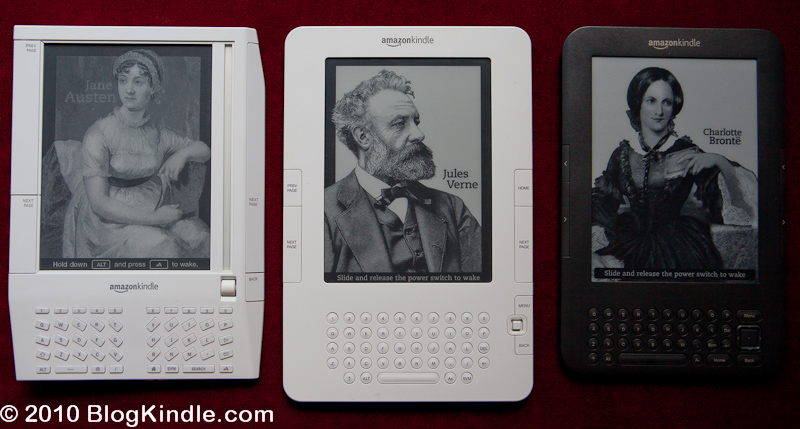 While the display quality of the first Kindle left plenty of things to desire for, it is possibly the most ergonomic Kindle to this day. The subsequent Kindles saw a gradual improvement to everything except to the buttons (not including K3's five way controller which I am fond of) with the keyboard on the two Kindle DX models bordering the realm of uselessness. Now with the touch version they completely did away with physical keyboard.

More virtual QWERTY keyboard, you must be kidding
If you ever tried to type anything longer than a short email on any modern tablet you will understand my frustrations: They are simply painful to type on. Qwerty keyboard was designed for physical keys, not glass surfaces with no tactile feedback.
I am already sick of touchscreens which seems to find its way into everything between the space shuttle and the common refrigerator. Before 2007 it would be outrageous to sell something without physical keys, now the reverse seems to be true.
Rant is over, let's get back to the topic.
Preliminary teardowns suggest that the lowest priced Kindle came with a Cortex-A8 based SoC, beat that Nokia. However the RAM and battery capacity has all been sliced by a half to reduce the overall cost.
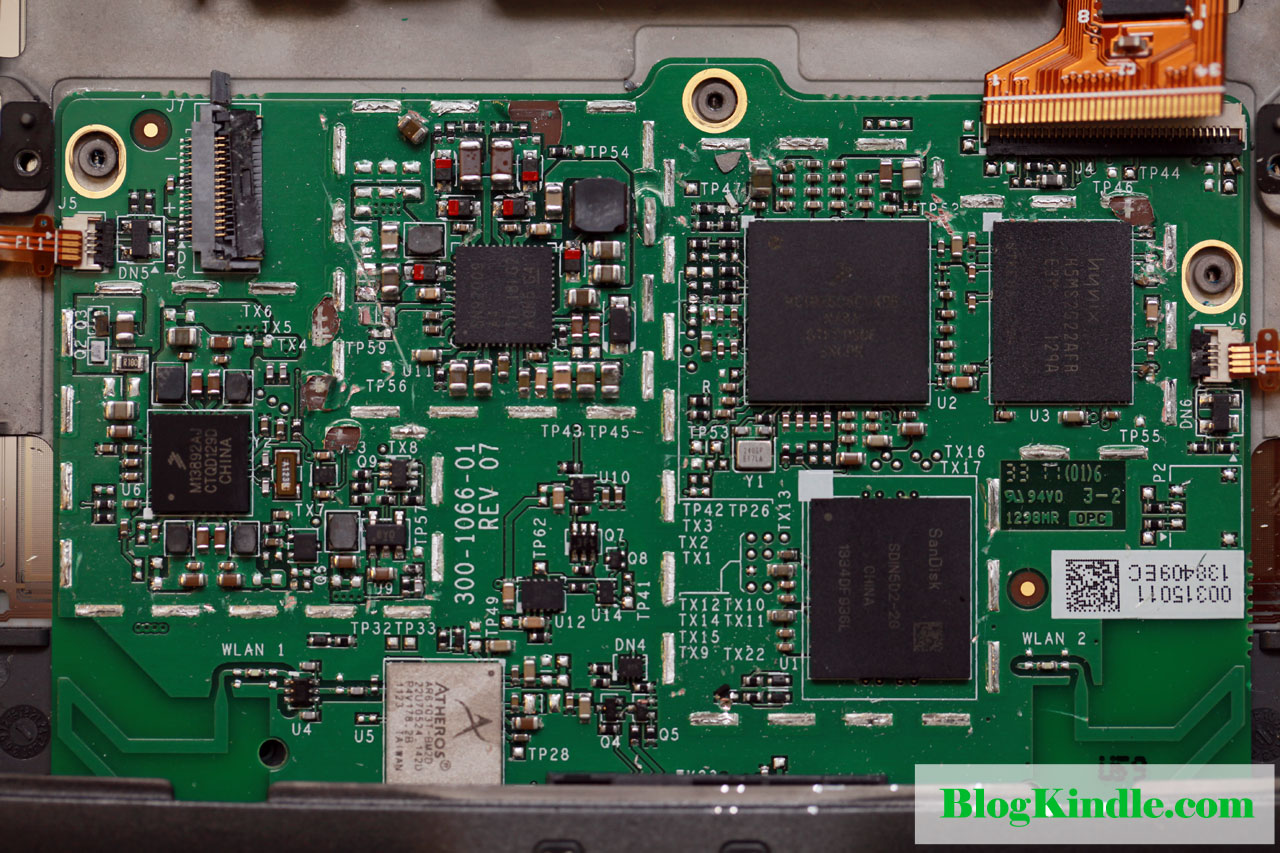
Do I have any desire to upgrade my current complement of reading devices(consisting of a Kindle DX International, a Kindle, er, Keyboard 3G not to mention smartphones and computers with Kindle clients)? Well not really. The hardware on the entry level model is rather limiting to be an upgrade; the CPU bump is a nice touch but the halved RAM killed it for me. The smaller battery, while drawing much criticism, should not be a serious issue in this day of age when we have already accustomed to charge our gadgets once per day. I don't see much point in a touch operated e-reader let alone a multimedia tablet. Egadget has summed my opinions rather eloquently in an earlier post that in essence, nobody apart from the tetraplegic really needs a tablet. The current craze for bigger screen size and touch gestures is nothing more than a invention like the bunch of merchants of Edinburgh who invented the myth of Highlander culture in the 18th century.

Meh
To its saving grace, Amazon had a sensible grasp on the best use for tablets: an advanced entertainment slate by stripping all the purported productivity features. In any case, everybody agrees that the Kindle Fire is the android twin of RIM's playbook soon to be forgotten.
Like it or not, Amazon is the internet's upcoming Wal-Mart and the more likely entity to change everything again about the way we read. I can already see Kindles being given for free in exchange of a certain amount of book purchases or Amazon Prime subscriptions, wait, I have seen something like this already....
Enters awkward opera, my favourite rendition of Der Hoelle Rache by the venerable Diana Damrau:
P.S. If you own a Kindle 2/DX like myself it is highly recommended that you flash Yifan Lu's hacked 3.1 firmware. You lose a few unimportant functions such as active content and TTS but get greatly improved reading experience, so check it out. If you don't have access to a K3 to extract the files, tweet me @DillADH and I will help you.
Monday, August 22, 2011
One day I will gather enough will power and....
...anyway previews of upcoming content:


And you never know, but I might start writing those unfinished series again. So, stay tuned, the next post will bring substance to this blog again.
The wonderful world of site-directed mutagenesis with thermal cycling
Pwnapple, why you should do it apart from getting cracked apps
Yashigani, the cabbage, and why outsourcing is killing the creative industry
Sunday, July 17, 2011
Friday, June 17, 2011
Canadians, Always on the Cutting Edge
In case you were not a huge follower of ice hockey (not that I know anything about it), Vancouver Canucks lost the Stanley Cup final at home, widespread rioting ensures.


Very considerate self-censorship
Worthy of the Pulitzer Award (In case you did not get the joke, click here)
Note to myself: So this is how you set a car on fire
Did you spot the ginge? Did you?
Duck and cover? Nah, a real anarchist throw them back
...........................................
Have not checked 4chan yet, but this feels like instant meme material, I offer my own image macro below:

---------------------------------------------------------------------------------
Posting of serious content will resume in late June after my exams are done, I promise, yeah.
Tuesday, May 10, 2011
They need Italy to complete the Axis
BREAKING NEWS: German Scientists create Mind-Controlled Vehicle
Meanwhile in Japan
Meanwhile in Japan
...there is nothing new under the sun
It amazes me how quickly people can forget things. Gevey and Rebel have been selling so-called "Unlocking SIM card" for a number of years and people reacted as if these named never existed before. If my memory serves right I bought my APDU kit from Rebel not long ago(before they became involved with i4, of course).
When Gevey broke the news that they have an working SIM interposer for i4, most people reacted in disbelief. Gevey themselves did not help when they released a (poorly) edited demo video and everybody was convinced that it was just another scam.
However, other reports soon emerged with some important details: First of all it seems to work, however it requires dialling 112 and data service only works if you enable Data Roaming. In hindsight it makes good sense why Gevey did not want us to know these things before they could ship the product: it can be copied very easily once the methodology has been figured out. In fact the same protocol/exploit has been found by other as early as November 2010 but nobody thought it could be made into a product.

Gevey only made it with meticulous planning: While they have been dropping hints about their product a long time ago, announcement was only made after the Dev Team admitted that they have no baseband unlocks - back in 2009 Gevey and others almost went out of business when ultrasn0w came out and there are tens of thousands of old SIM interposers gathering dust in their warehouses. Mass production followed soon enough to saturate the market, price was initially high to make sure they get a fair scoop of profit before copycats and negative feedback could ever appear.
On the contrary, Rebel made a number of bold claims ("No need to use the illegal number[sic] 112", "World First", "Untethered unlock", btw do we even have a tethered unlock in the first place?) and failed to back them up with evidence. Release date were pushed back a few times, shipping charges are exonerate and the worst part: They don't even work, at least not as advertised.
Anyway let's get to the methods:
What you will need:
Programmable SIM Card - Preferably the newer types and of course it needs to be cut to fit in the SIM tray.
SIM Programmer - Those PL-2303 USB dongles are cheap and easy to find on ebay. The more expensive smartcard programmers often based on the R200 PC/SC chipset is an overkill and does not work well with 64-bit Windows. For cheapskates like myself, you can build a simple circuit that allows direct connection via serial port.
A. The key is never transmitted directly, instead it is used within the SIM card to encrypt a random string sent from the network. Given enough time, a collision could be found to deduce the key, however most SIM cards have a built-in counter that disables the SIM after an unknown number of failed attempts so brute-force will never work. You have been warned and it is your fault if anything happens. BTW anybody that claims to be able to obtain Ki in mere minutes is probably fraud material since the speed is constrained by the very limited computation power of the SIM chip.
B. Cracking SIM cards, even your own SIM, is still illegal because the SIM is not the end user's property (it always belong to the provider) and most carriers have clauses in their Terms of Service that forbade any tampering with SIM cards. While they are unlikely to take anybody to court, you will have a lot of explanation to do after a few requests to replace your SIM card.
For those with legitimate access to their SIM data:
1. Write your SIM data to the blank SIM, leave ICCID, SMSC and Ki as is and replace the first eight digits of your IMSI with 08091010.
2. With your original SIM in your i4, dial 112 and immediately disconnect.
3. Toggle flight mode ON
4. Eject SIM tray.
5. Replace SIM with the one we programmed.
6. Toggle flight mode OFF, you should have reception in a few seconds.
My earlier comments and FAQ for Gevey applies for the method as well. Chances are you will retain the reception after reboot, however there might be issues with data and incoming calls. There is some room to optimise the outcome following a reboot but it is impossible to test on every single MNC/PLMN/VLR/MSC which could all have a different authentication protocol. This is why Gevey decided to play it safe by implementing an elaborate STK menu to require 112 dialing following every reboot; Rebel did away with the STK with the hope that it might allow some users to restart their phone without losing reception, yet they ended up with a disappointing and erratic product.
I have tried to find a way to make the method work without having to dial 112 but so far it appears impossible unless the baseband FW is patched to handle TMSI like it used to prior to 05.11.07. Not mention if we were able to patch the baseband directly we would already have a software unlock.
So here you go folks, it's the "unlock" we have been talking about for the past two months. All's right if it works; don't lose any sleep if it doesn't work for you - after all it is just a phone and we have more important things to worry about in dear life.
P.S. And I must agree with @sherif_hashim that "money for unlock = bullshit"
When Gevey broke the news that they have an working SIM interposer for i4, most people reacted in disbelief. Gevey themselves did not help when they released a (poorly) edited demo video and everybody was convinced that it was just another scam.
However, other reports soon emerged with some important details: First of all it seems to work, however it requires dialling 112 and data service only works if you enable Data Roaming. In hindsight it makes good sense why Gevey did not want us to know these things before they could ship the product: it can be copied very easily once the methodology has been figured out. In fact the same protocol/exploit has been found by other as early as November 2010 but nobody thought it could be made into a product.
They did come up with other interesting accessories such as this i4 dual-SIM device which can be reprogrammed to act like a gevey
Gevey only made it with meticulous planning: While they have been dropping hints about their product a long time ago, announcement was only made after the Dev Team admitted that they have no baseband unlocks - back in 2009 Gevey and others almost went out of business when ultrasn0w came out and there are tens of thousands of old SIM interposers gathering dust in their warehouses. Mass production followed soon enough to saturate the market, price was initially high to make sure they get a fair scoop of profit before copycats and negative feedback could ever appear.
On the contrary, Rebel made a number of bold claims ("No need to use the illegal number[sic] 112", "World First", "Untethered unlock", btw do we even have a tethered unlock in the first place?) and failed to back them up with evidence. Release date were pushed back a few times, shipping charges are exonerate and the worst part: They don't even work, at least not as advertised.
Anyway let's get to the methods:
What you will need:
Programmable SIM Card - Preferably the newer types and of course it needs to be cut to fit in the SIM tray.
SIM Programmer - Those PL-2303 USB dongles are cheap and easy to find on ebay. The more expensive smartcard programmers often based on the R200 PC/SC chipset is an overkill and does not work well with 64-bit Windows. For cheapskates like myself, you can build a simple circuit that allows direct connection via serial port.
SIM Data - Three out of four parameters, namely IMSI, ICCID and SMSC are stored on the SIM unencrypted, however the main authentication key Ki is not. Best way to get it is to ask your mobile service provider to disclose these figures for your personal use, and I know some carriers in UK that allows you to have a back-up SIM. There are various "solutions" for sale over the internet to obtain your Ki by brute force however there are good reasons to avoid them:


A. The key is never transmitted directly, instead it is used within the SIM card to encrypt a random string sent from the network. Given enough time, a collision could be found to deduce the key, however most SIM cards have a built-in counter that disables the SIM after an unknown number of failed attempts so brute-force will never work. You have been warned and it is your fault if anything happens. BTW anybody that claims to be able to obtain Ki in mere minutes is probably fraud material since the speed is constrained by the very limited computation power of the SIM chip.
B. Cracking SIM cards, even your own SIM, is still illegal because the SIM is not the end user's property (it always belong to the provider) and most carriers have clauses in their Terms of Service that forbade any tampering with SIM cards. While they are unlikely to take anybody to court, you will have a lot of explanation to do after a few requests to replace your SIM card.
For those with legitimate access to their SIM data:
1. Write your SIM data to the blank SIM, leave ICCID, SMSC and Ki as is and replace the first eight digits of your IMSI with 08091010.
2. With your original SIM in your i4, dial 112 and immediately disconnect.
3. Toggle flight mode ON
4. Eject SIM tray.
5. Replace SIM with the one we programmed.
6. Toggle flight mode OFF, you should have reception in a few seconds.
My earlier comments and FAQ for Gevey applies for the method as well. Chances are you will retain the reception after reboot, however there might be issues with data and incoming calls. There is some room to optimise the outcome following a reboot but it is impossible to test on every single MNC/PLMN/VLR/MSC which could all have a different authentication protocol. This is why Gevey decided to play it safe by implementing an elaborate STK menu to require 112 dialing following every reboot; Rebel did away with the STK with the hope that it might allow some users to restart their phone without losing reception, yet they ended up with a disappointing and erratic product.
----------------------------------------------------------------------------------
I have tried to find a way to make the method work without having to dial 112 but so far it appears impossible unless the baseband FW is patched to handle TMSI like it used to prior to 05.11.07. Not mention if we were able to patch the baseband directly we would already have a software unlock.
So here you go folks, it's the "unlock" we have been talking about for the past two months. All's right if it works; don't lose any sleep if it doesn't work for you - after all it is just a phone and we have more important things to worry about in dear life.
P.S. And I must agree with @sherif_hashim that "money for unlock = bullshit"
Tuesday, April 19, 2011
So much to do, so little time
I had to delete several draft posts that I spent hours writing yet realising in the end that I will never finish any of them. Terrible waste of effort but much better than wasting more time on it later on.
I am not desperately short of time yet - such a crisis it will come much later; however my time is badly fragmented with various commitments everywhere. This is the type of situation I am not good with, and I am still jealous of people who are able to organise their life so well.

My first successful plasmid PCR experiment.
Things are alright-ish in the lab with me moving fairly fast according to plan. Finally I can appreciate the past toiling for for the undergraduate labs; if it was not for the experience I could never have done anything with nothing but a product manual. Gatecrashing another stage III genetics paper proved useful as well - I can actually understand the techniques I am using. Working in a small group headed by a laid-back supervisor has it's pros and cons, well, I like it that way.
The entire honours thing has been somewhat apprehensive until last week when I started working in the lab and found things much easier than anticipated: People are genuinely nice when you ask for help, but they would leave your alone when you need to; having access to copious quantity of pipette tips/glassware/reagents is a nicely self-inflating bonus too(one that makes you feel more important than you really are).On the contrary, people with their PostDipSci probably all had a hard time when they started their MSc because the former had little practical content.
----------------------------------------------------------------------------------
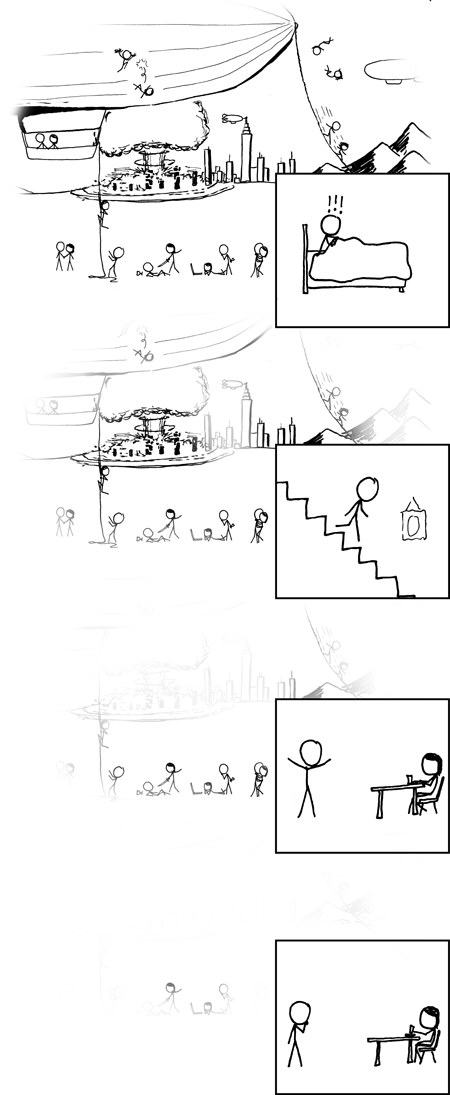
Yeah, every damned morning I know. Nevertheless there is one that I remember vividly. The actual content was just as laughable and absurd as the example in the xkcd comic above(namely a mixture of The Graduate, recent Gantz chapters, drunken yarns with older friends and assorted current events including the tsunami), yet I remember every detail of it because I was, for a moment in the land of Oneiroi, truly happy and I have never been overloaded with joy ever in my life.
In nothing but a dream.
Subscribe to:
Posts (Atom)
生きていこう